Guide · LTL carriers · Updated October 12, 2026
Old Dominion Bill of Lading (BOL)
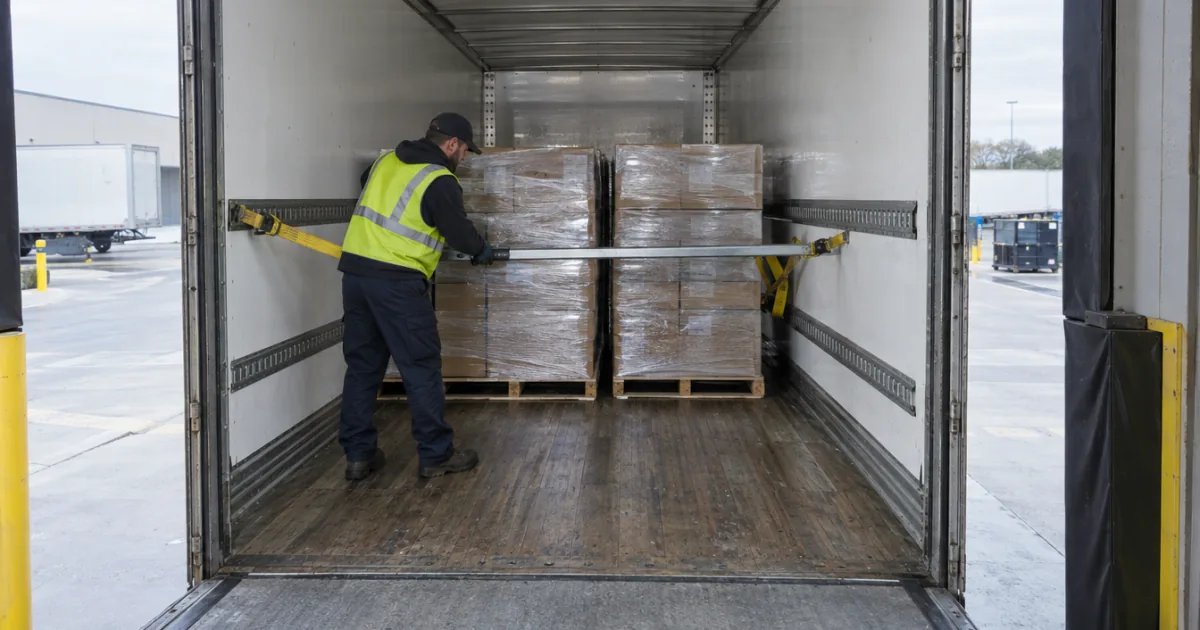
The Old Dominion BOL is the straight bill of lading Old Dominion Freight Line (OD) works from on LTL pickups, and OD publishes the official one itself: a printable PDF on its Fill & Print Shipping Forms page and an online eBOL for account holders. This site's free generator makes a standard short-form BOL, which is a different document from OD's own.
What this page is, and is not
An independent guide for people who searched for the Old Dominion bill of lading. It is not affiliated with, endorsed by or connected to Old Dominion Freight Line, and it does not reproduce OD's form. What it says about OD's paperwork comes from OD's own public pages, each named and linked where it is used. Where those pages are silent, on what an accessorial costs or whether OD will take a BOL in some other layout, this page leaves the answer to OD.
Getting the Old Dominion BOL PDF or the eBOL
OD's page How to Fill Out the OD Bill of Lading offers two routes: fill in and print the paper form so it is ready when the driver arrives, or submit an electronic BOL online. The paper forms live on OD's Fill & Print Shipping Forms page.
| What | What OD says about it |
|---|---|
| Printable Bill of Lading | A PDF you can fill in before printing. OD says Adobe Acrobat Reader is required to view and complete its forms. |
| BOL Guide | A PDF that explains each numbered section of the printable form. |
| eBOL | Needs an ODFL.com login and schedules the pickup at the same time. OD lists it for Standard LTL and Spot Pick shipments. |
| Reprint BOL | An ODFL.com tool for pulling up your BOLs and printing them again. |
The printable form
If you came looking for an Old Dominion blank BOL to fill in by hand, this is the one. Typing into it before you print is still the better habit, since a typed weight cannot be misread at the terminal.
Open it in Acrobat Reader, not a browser tab. OD's forms page notes that the form's QR code generation needs Adobe Acrobat Reader or Acrobat Pro, as opposed to a browser-based PDF reader. Fetch the PDF from OD each time, too: a copy rehosted elsewhere may be an older revision than the one OD links today.
The eBOL
The FAQ on OD's how-to page gives two ways in once you are logged in: "Create BOL" from your Dashboard, or "Schedule Pickup and Create BOL" under Tools on the homepage. The pickup request travels with the BOL, so there is one form to complete instead of two.
On lanes you ship every week, saved locations and commodities pre-populate the form, and "Save BOL for Later" stores a half-finished BOL as a template or an incomplete entry under My Account, in BOL Templates. OD's rules for changing an eBOL afterwards are in the questions at the end of this page.
What the ODFL BOL asks for, box by box
The standard Old Dominion Freight bill of lading is headed "Straight Bill of Lading", and OD's BOL Guide (a PDF) walks through it with numbered callouts. Here is what the guide asks for, in our words and in the form's order. The guide itself says it is there to help, and that understanding the effect of your choices stays with you.
| On the form | What OD's guide asks for |
|---|---|
| PRO label | A space at the top right. The guide says your PRO label can be printed once you request a pickup on odfl.com, or the driver will have one for you. |
| Freight charges | Prepaid or collect, defaulting to prepaid. Prepaid sends the freight invoice to the shipper; collect sends it to the consignee. |
| Shipper and consignee | Company name and address at each end, with a contact name and phone number for the origin and for the delivery location. |
| Bill-to | The third party paying the freight charges, when that is neither the shipper nor the consignee. |
| B/L#, LOAD#, P/O# | Your own references. The guide says none of them is required, and any you enter will appear on the freight invoice. |
| Accessorial services | Any extra service the shipment needs. The guide's examples use OD's codes: ARN arrival notification, CA call for appointment, EXD trade show or expo delivery, HYD hydraulic lift gate, IDC inside delivery, OVL overlength article, PFF protect from freezing, RDC residential delivery. |
| Freight lines | For each commodity: handling units, pieces and piece type; the HAZ box ticked if it is hazardous; a complete description, with the hazmat ID number, hazard class and packing group where they apply; the NMFC number or the freight class; and the weight including packaging. Then totals of handling units and weight. |
| Special instructions, delivery date | Delivery or handling instructions, and a required delivery date if you need one. |
| Hazmat emergency contact | If HAZ is ticked, an emergency contact name and phone number, plus a contract number if one exists. |
| Rate Estimate # | The rate reference number OD gave you. |
| Cargo liability and declared value | For additional cargo liability, the guide refers you to OD's rules tariff or customer service. Separately, it asks for the agreed or declared value of the property. |
| Signatures | The company and name of the person releasing the shipment, and that person's signature. The block beside it is completed by the driver. |
Two of those boxes look alike and are not. Declared value and additional cargo liability are separate entries on OD's form, and its printed terms say that noting a value is not a request for additional cargo liability. The standard limits sit in those terms and in OD's rules tariff, which is where to read them.
How OD wants mixed pallets written up
How many lines does a shipment get? OD's how-to page answers that for three cases, condensed here.
- Several pallets, different commodities. One line per pallet, each with its own description, weight and freight class.
- Several pallets of one commodity. A single line for the commodity, with the handling units set to the total number of pallets.
- One pallet holding several commodities. A line for each commodity with its piece count, weight and class. Total pieces should match the cartons on the pallet, and handling units should match the number of pallets.
Handling units and pieces are separate counts on any BOL. The step-by-step guide to filling out a bill of lading explains the difference along with the rest of the form.
PRO number, BOL number and Old Dominion tracking
OD tracks by PRO number. Its Track & Trace Shipments page accepts up to 25 numbers at a time, one per line or separated by commas, and its error messages are written around PROs. Log in to ODFL.com and the page offers what OD calls advanced trace options, which search by PRO, BOL, PO, LOAD and pickup numbers.
So the number in your B/L# box is useful, just not in the public tracking box. It ties OD's invoice back to your own order, and from inside an account it will find the shipment. The PRO is OD's number.
OD's own customer FAQ tells shippers to always keep a record of the PRO. That post spells PRO out as "Pickup Request Order" and says the number works on the odfl.com homepage, on the tracking page and in the En Route tile of an account dashboard. Email or text alerts can be switched on when the shipment is booked or from the tracking page.
Freight class and NMFC on an Old Dominion freight BOL
Every freight line on OD's printable form has an NMFC column and a Class column, and the BOL Guide asks for the NMFC number or the freight class of each commodity. OD's GS1 form heads the same column "NMFC/Sub", and its customer FAQ lists NMFC, sub or freight class among the commodity details you need for a rate quote.
The sub has carried more weight since NMFC Docket 2025-1 took effect on July 19, 2025. Items classed by density now rate on a single 13-step scale, numbered as subs 1 to 13, so an item number on its own does not say which density band, and therefore which class, applies. Density is the gross weight of the built pallet divided by its cubic feet, measured with the deck included. The freight class calculator runs that for a whole shipment and shows how much weight or height each pallet is from the next class.
OD's GS1 (VICS) bill of lading and its other forms
OD's Fill & Print Shipping Forms page lists more than one bill of lading. Beside the standard form sit a GS1 Standard Bill of Lading, labelled on the page as formerly known as the VICS Bill of Lading, and a GS1 BOL Supplement, formerly the VICS Supplement.
The GS1 form is OD's retail layout. Its main addition is a Customer Order Information block, with an order number, quantity and weight for each customer order, which is what a retail distribution center's receiving team reconciles against. When a retailer's routing guide asks for a VICS bill of lading by name, this is the version OD publishes.
Alongside it, OD's forms page carries a Trade Show Bill of Lading, a Truckload Bill of Lading, and separate Canada and Mexico bills, each listed alongside the customs and certificate-of-origin forms for its lane. For an ordinary domestic LTL pickup, OD's how-to page points you to the standard printable form or the eBOL.
When a standard short-form BOL is enough
The generator on this site produces a standard short-form straight bill of lading, the generic layout with shipper, consignee and bill-to blocks, a freight grid carrying NMFC number and class, a declared value line and signature blocks. It is not the Old Dominion BOL form and is not laid out like it. OD's branding, its Rate Estimate box and its printed terms and liability wording are not on it.
OD's how-to page describes two ways to tender a BOL, its printable form and its eBOL, and says nothing either way about other layouts, so this page will not guess. A short form earns its place elsewhere: with a carrier that publishes no form of its own, or as a draft that pulls a shipment's details together before you key them into OD's eBOL.
Ask OD before you tender anything else
If you want to hand an OD driver your own document, settle it at booking with your OD service center or account contact. One question covers it: "Can this pickup move on our own straight bill of lading, or do you need your printable form or the eBOL?" The driver at your dock is the wrong person to ask. The answer belongs to whoever set up the account.
You can build a short form with the free bill of lading generator, or open the bill of lading template for the long form and a VICS layout. If you also ship with other LTL carriers, the same questions are worked through for the FedEx Freight bill of lading, the XPO bill of lading and the Estes bill of lading.
Common questions
What is the Old Dominion tracking BOL number?
It is the B/L# on your bill of lading, a reference you choose yourself, and it is not the number OD tracks by. Old Dominion tracks shipments by PRO number, and its public tracking page takes up to 25 PROs at once. Log in to ODFL.com and the advanced trace options also search by BOL, PO, LOAD and pickup numbers, so a BOL number finds a shipment from inside an account. OD's BOL Guide says the B/L# is optional and prints on the freight invoice.
Is a BOL legally required?
For interstate freight moved by a for-hire, non-exempt motor carrier, yes. Under 49 CFR 373.101, such a carrier must issue a receipt or bill of lading for property tendered in interstate or foreign commerce, showing the consignor and consignee, origin and destination, the number of packages, a description of the freight and, where it affects the rate, the weight, volume or measurement. The shipper usually prepares the document and the carrier signs it at pickup. The guide to what a bill of lading is covers its legal jobs in more depth.
Is a BOL number the same as a tracking number?
No. A BOL number is the shipper's own reference, written in the B/L# box on OD's form, and you pick it. The tracking number at Old Dominion is the PRO, which OD assigns; its BOL Guide says the PRO label can be printed once you request a pickup on odfl.com, or the driver will bring one. Both numbers point at the same shipment, and the B/L# also prints on OD's invoice. The public tracking page is built around the PRO, while searching by BOL number needs an ODFL.com login.
Can I fill out the Old Dominion BOL online?
Yes, with an ODFL.com account. OD's eBOL opens from the account Dashboard under "Create BOL", or from Tools under "Schedule Pickup and Create BOL", and it books the pickup in the same step. It can pre-fill saved locations and commodities and keep unfinished work as a template or an incomplete entry. Without an account, use the printable PDF on OD's Fill & Print Shipping Forms page, which can be filled in before printing. OD says its forms need Adobe Acrobat Reader.
Can I change an Old Dominion eBOL after I submit it?
Usually, as long as the pickup has not gone to a driver. OD's bill of lading FAQ says an eBOL created within the last 14 days can be changed or cancelled on its Modify or Cancel Bill of Lading page until the pickup is assigned to a driver. Same-day pickups on an eBOL cannot be modified. If a pickup scheduled for today is missing from your list of modifiable PROs, a driver already has it, and OD says to contact the origin service center for help.
Who pays when an Old Dominion BOL is marked prepaid?
The shipper. OD's BOL Guide says prepaid sends the freight invoice to the shipper and collect sends it to the consignee, and the form treats charges as prepaid unless collect is marked. When someone else pays, a broker or a parent company for example, put that company's name and billing address in the Bill-to box; on the eBOL, OD says to select Prepaid, then "Another Address". OD also warns that changing the paying party after pickup can delay the shipment.
Where do I find a copy of my Old Dominion BOL or POD?
On ODFL.com. OD's customer FAQ says BOL and proof of delivery documents come up when you track a PRO, and that logged-in users can open them from the PRO details of delivered, en route or pending shipments on the dashboard. They are also under Shipping Documents. To print one of your BOLs again, OD's forms page links a Reprint BOL tool. Keep the copy the driver signed at pickup as well, because that signature is your receipt for the freight.
Old Dominion is a trademark of its owner. This site is independent and has no affiliation with Old Dominion.